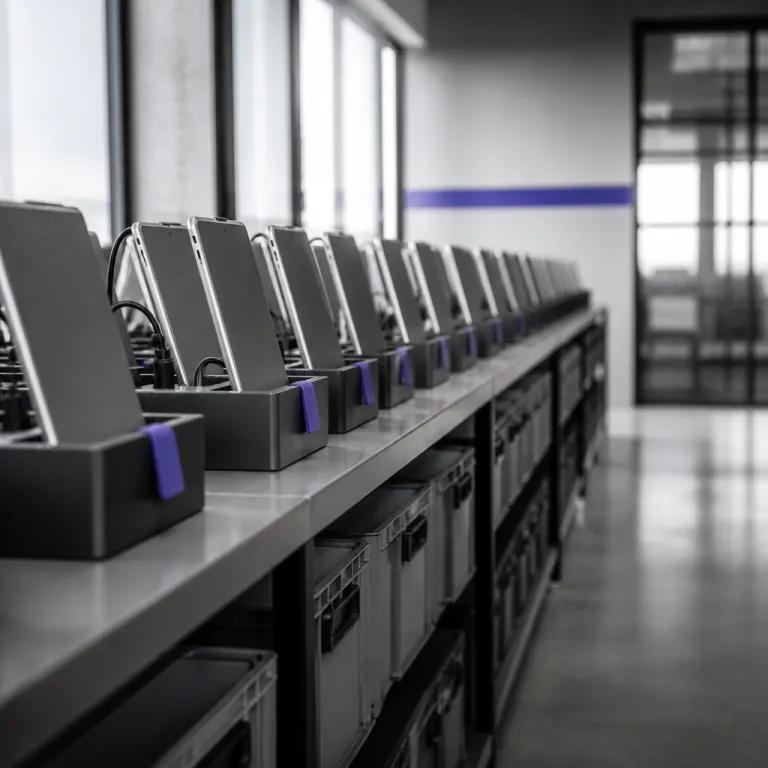
From headcount planning to fleet management of AI recruiting agents
Talent acquisition leaders are quietly rewriting their operating model around AI-driven recruiting agents and hybrid talent acquisition team management. The core planning question is no longer how many recruiters you can afford, but how many agents each recruiter can safely supervise while protecting candidate experience and hiring decisions. When artificial intelligence moves from pilot tools to production agents, your recruitment process starts to look less like a traditional HR function and more like fleet management for a mixed équipe of humans and machines.
Think of each agent as a specialized digital colleague embedded in the hiring process. Some agents focus on sourcing and screening for high volume roles, others handle interview agent workflows, while a third category manages scheduling and calendar orchestration in real time. The shift is from a recruiter as executor who manually runs every step, to a recruiter as orchestrator who directs AI recruiting activities and intervenes only when human judgment or nuanced decision making is required.
In this model, recruiting agents become the first line of engagement for many candidates. An AI agent can parse job descriptions, match each candidate profile against historical hiring data, and generate personalized candidate messages that explain why a specific job is relevant. Those agents free human recruiters to focus on deeper candidate engagement, complex interview preparation, and coaching hiring managers on structured interviewing and better hiring decisions. As one senior recruiter at a global SaaS company put it, “The agents do the heavy lifting on volume; I finally have time to talk to people instead of chasing calendars.”
Fleet management thinking forces you to define clear roles for both humans and agents. Recruiters focus on relationship building, context rich assessment, and negotiation, while agents handle repetitive recruiting tasks such as initial screening, status updates, and interview scheduling at scale. When you design AI-powered talent acquisition team management this way, you get a data driven system where every agent interaction generates actionable insights that improve both recruiter performance and candidate experience over time. A practical starting benchmark is to pilot with three to five agents per recruiter, then adjust the agent-to-recruiter ratio based on measured quality, escalation volume, and candidate satisfaction.
What to automate, what to protect, and how to govern AI agents
Not every part of recruitment should be handed to an agent, even in a mature AI-enabled talent acquisition operating model. The safest starting point is automating sourcing and screening for well defined roles, basic scheduling, and low risk communications such as reminders or status updates. You protect the human led parts of the hiring process that rely on empathy, context, and subtle decision making, especially final hiring decisions and complex offer negotiations.
For example, an interview agent can run structured pre screens for high volume customer support jobs, asking consistent questions and scoring answers against predefined criteria. Those agents can then route only qualified candidates to human recruiters, who conduct deeper interviews and calibrate with hiring managers on nuanced fit. This division of labour lets recruiters focus on higher value recruiting work while automated recruiting systems handle the repetitive front end of the recruitment process. In one consumer services company, an AI screening agent reduced manual resume review by 60 percent while recruiters maintained full control over final shortlists and hiring decisions.
Governance becomes non negotiable once agents operate autonomously in real time. You need explicit escalation rules when an agent encounters ambiguous candidate data, unusual job requirements, or potential bias signals in screening outcomes, and you must define when recruiting agents must hand control back to a human. Legal and compliance expectations are also rising fast, and every TA leader should study the implications of emerging AI regulations for recruitment, starting with a detailed playbook such as the EU AI Act impact on recruiting systems. Under the EU AI Act, most AI-driven candidate screening and ranking tools are treated as “high-risk” systems, which means you must document training data, monitor for discriminatory impact, maintain human oversight, and provide clear information to candidates about automated decision making.
Governance for AI-driven talent acquisition teams should mirror how you manage any critical enterprise system. Set performance benchmarks for agents versus human recruiters on speed, quality, and fairness, then run regular quality sampling of candidate interactions and screening decisions. When you treat each agent as a measurable asset in your talent acquisition fleet, you can adjust workloads, refine prompts, and retrain models with the same discipline you apply to optimizing recruiter headcount and hiring process design. Many organizations start with target thresholds such as a 5–10 percent acceptable variance between human and agent screening decisions and a maximum automated rejection error rate of 1–2 percent on audited samples.
Designing the human–AI partnership: recruiters as orchestrators, not operators
Once agents enter daily recruiting workflows, the role of the human recruiter changes fundamentally. Recruiters focus less on manual scheduling, repetitive screening, and transactional candidate communication, and more on orchestrating agents, interpreting data, and shaping the overall candidate experience. The most effective AI agents talent acquisition team management strategies treat artificial intelligence as a force multiplier for human judgment, not a replacement for it.
In practice, that means training recruiters to supervise agents, audit outputs, and handle exceptions with confidence. A recruiter might review a dashboard of actionable insights generated by automated recruiting systems, then decide which candidates to fast track, which hiring managers need calibration, and where the hiring process is leaking talent. This orchestration role requires new skills in workflow design, prompt engineering for interview agent scripts, and critical evaluation of data driven recommendations. A practical operating target is to keep agent-to-human handoff rates in the 15–30 percent range for high volume roles, with clear playbooks for how recruiters handle those escalations.
Candidate engagement also becomes more layered when agents are involved. An agent can send a personalized candidate message in real time after each interview, summarizing next steps and reinforcing the employer value proposition, while the human recruiter follows up with a deeper conversation about growth, culture, and long term fit. To keep this blended experience coherent, you need a reliable measurement system for candidate experience, such as the frameworks described in this guide to building a reliable hiring system for candidate experience measurement. One candidate in a recent pilot summarized the difference clearly: “The chatbot kept me informed every step of the way, but it was the recruiter’s call that convinced me this was the right move for my career.”
Done well, AI agents talent acquisition team management lets recruiters spend more time on strategic conversations and less time on administrative tasks. Recruiters can coach hiring managers on writing sharper job descriptions, run structured interview training, and analyze recruitment data to improve quality of hire and retention. The human side of recruiting does not disappear; it becomes more concentrated, more intentional, and more obviously valuable to both candidates and the business. Over time, this human–AI partnership can support more consistent hiring decisions, stronger employer branding, and a more resilient talent acquisition operating model.
Operating metrics and risk management in an AI agent fleet model
Running AI agents talent acquisition team management as fleet management demands a new metric stack. You still track classic hiring KPIs such as time to fill, cost per hire, and quality of hire, but you also monitor agent specific metrics like handoff rates to humans, error rates in screening, and candidate satisfaction with automated interactions. The goal is a data driven view of how agents and humans together move candidates through the hiring process.
For instance, you might compare how long an agent takes to complete sourcing and screening for a high volume role versus a human recruiter, then examine whether the agent’s shortlist leads to better hiring decisions or higher early attrition. You can track how often an interview agent escalates to a recruiter because of ambiguous candidate responses, and whether those escalations correlate with stronger eventual hires. Over time, these actionable insights help you tune which parts of recruitment remain agent based and which require more human involvement. Many organizations set initial targets such as a 20–40 percent reduction in time to shortlist and a neutral or improved quality of hire score within the first two hiring cycles.
Risk management also shifts when automated recruiting systems touch sensitive candidate data at scale. You must ensure that every agent complies with privacy regulations, that bias monitoring is continuous, and that your contracts with ATS and AI vendors reflect shared accountability for screening outcomes, as explored in depth in this analysis of how AI screening contracts change vendor liability. Internal audit, legal, and talent acquisition leaders should jointly define thresholds for acceptable variance between human and agent decisions, and specify when an agent must defer to a human recruiter. Typical controls include role based access to candidate data, retention limits aligned with local law, and quarterly fairness reviews across gender, age, and other protected characteristics.
When you treat agents as part of a managed fleet, you also plan capacity differently. Instead of asking whether you have enough recruiters for peak recruiting seasons, you model how many agents per recruiter you need to maintain response times, protect candidate engagement, and support hiring managers with timely shortlists. The operating model shifts from reactive hiring to proactive talent acquisition, where every agent, every recruiter, and every candidate interaction is instrumented, measured, and continuously improved — not just job descriptions, but true talent magnets.
Key figures on AI agents and talent acquisition
- According to SHRM’s State of AI in HR report (2024), AI adoption in HR functions rose from roughly one quarter of organizations to more than two fifths within two years, signaling a rapid shift from experimentation to production use in recruiting workflows. The report, based on a survey of HR leaders across industries, highlights that talent acquisition and candidate screening are among the top three use cases for AI in HR.
- LinkedIn’s Global Talent Trends research (2023) found that a clear majority of recruiting professionals believe AI will be a significant help in sourcing and screening candidates, but only a minority expect it to fully replace human recruiters, underscoring the importance of human–AI partnership models. In that edition of Global Talent Trends, more than 60 percent of respondents said they expect AI tools to improve efficiency, while fewer than 20 percent anticipated a net reduction in recruiter roles.
- Gartner has reported that organizations using AI based recruiting tools for high volume hiring can reduce time to shortlist by up to 30 percent while maintaining or improving quality of hire, when proper governance and bias monitoring are in place (Gartner, 2023). The analysis notes that the most successful adopters combine AI-driven sourcing and screening with clear human oversight, documented escalation paths, and regular audits of model performance and fairness.