Reframing candidate ghosting prevention recruiting as a funnel problem
Candidate ghosting prevention recruiting starts with accepting that the candidate is reacting to your funnel, not misbehaving randomly. When job seekers vanish, they usually respond to long response times, unclear expectations in the hiring process, or a recruitment process that feels disrespectful of their time and effort. Treat every ghosted candidate as a data point about a broken step in your hiring, not as a character flaw in candidates.
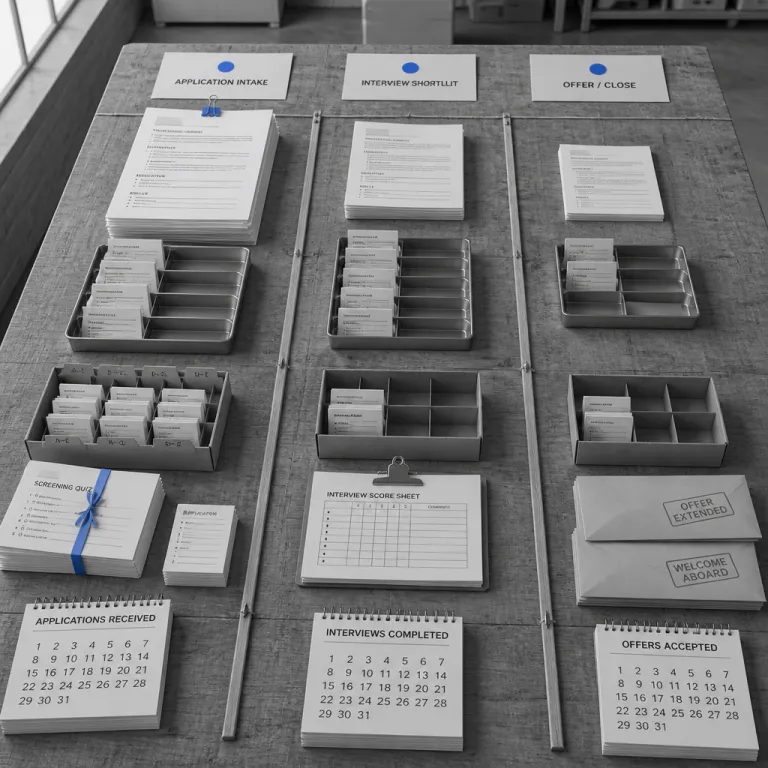
Across thousands of jobs and roles, three breakpoints consistently trigger candidate ghosting in both early and late stages. The first is post application silence, when a candidate submits a job application and hears nothing meaningful from the company for several days, which makes many candidates ghost before the first interview. The second is the gap between interviews, where candidates ghost when scheduling stalls, and the third is the period between final interview and offer, when approval delays cause your strongest talent to accept other offers while your recruiter waits for signatures.
For senior recruiters and recruiting leaders, the goal is not to blame ghosting candidate behaviour but to engineer a hiring process that makes ghosting irrational. That means designing communication cadences that help prevent silence, using automation to reduce candidate wait times, and aligning recruiter behaviour with what candidates actually experience during their job search. When you do this consistently, candidate experience improves, candidates ghost less often, and your employer brand stops leaking value at the very moments when candidates are deciding whether moving forward with your company is worth their energy.
Drop off point 1: post application silence in days 1 to 3
The first major leak in candidate ghosting prevention recruiting happens in the seventy two hours after a candidate applies for a job. Most companies send a generic email receipt, then go quiet while recruiters triage résumés and hiring managers debate the role, which leaves candidates guessing whether they applied to a real job or one of the many ghost jobs cluttering job search platforms. During this window, job seekers often apply to several companies, and the first recruiter who offers clarity on the process usually wins their attention.
Data shows that seventy eight percent of job seekers expect a clear timeline for the hiring process, not just a confirmation email that their application entered the recruitment process. To prevent candidate frustration, send a second, more detailed message within twenty four hours that explains the steps, expected time to interview, and approximate time hire for the role, and reference your company culture so candidates can self select out early. This single message can help prevent early ghosting, reduce candidate anxiety, and signal that your company treats candidates as partners rather than as anonymous résumés.
Operationally, configure your ATS, whether it is Greenhouse, Lever, or Workday Recruiting, to trigger a structured email sequence for all new candidates. The first email acknowledges the application, the second outlines the hiring process and candidate experience standards, and a third short message after day three either moves the candidate forward or provides respectful feedback if you are not moving forward. When candidates see that your company closes the loop quickly, they are less likely to become seekers ghosted by silence and more likely to stay engaged instead of ghosting your recruiter when another offer appears.
Drop off point 2: between interviews in days 7 to 14
The second leak in candidate ghosting prevention recruiting appears between the first and second interview, when scheduling delays quietly erode trust. Once a candidate has invested time in a screening interview, they expect the recruiter and hiring manager to show matching urgency, and gaps longer than five business days cause up to forty percent of candidates to disengage. In practice, this is where many candidates ghost because they assume the company has lost interest or is unable to make decisions.
Automated scheduling tools such as Calendly, GoodTime, or the native schedulers in modern ATS platforms routinely save recruiters two to ten hours per week by eliminating back and forth email threads. Use that time to send personalised updates that reinforce the candidate experience, explain the next interview step, and share a short note about company culture or the team behind the role. This blend of automation and human contact can reduce candidate drop off, help prevent misunderstandings, and position your employer brand as organised and respectful rather than chaotic.
To avoid candidates ghost at this stage, define a service level agreement for your recruiting team that every post interview candidate receives an update within forty eight hours, even if the decision is still pending. A short message such as “we are still interested, here is what we are waiting on, here is when you will hear from us next” keeps the candidate moving forward psychologically, even before an offer is on the table. For deeper guidance on enhancing the candidate experience in complex recruiting, you can review this analysis of candidate experience in executive hiring, then adapt the same principles to high volume roles where ghosting candidate behaviour is even more common.
Drop off point 3: from final interview to offer in days 1 to 5
The third and most painful leak in candidate ghosting prevention recruiting sits between the final interview and the formal offer. This is where your best candidate, who has invested multiple interviews and perhaps a case study, suddenly goes silent because another company moved faster with a compelling offer. When your internal approval process takes more than five days, you effectively invite candidates to test other options and increase the risk that you will be ghosted at the moment of offer acceptance.
To protect this stage, map every approval step in your recruitment process from final interview feedback to signed offer, and measure the average time hire from decision to contract. Where you see multi day gaps, redesign the process so that hiring managers submit structured feedback within twenty four hours, finance pre approves compensation bands, and HR prepares standard offer templates in advance for critical roles. Companies with strong candidate experience often see up to seventy percent improvement in quality of hire, partly because they reduce candidate drop off and signal decisiveness that top talent values.
Communication still matters as much as speed, because candidates ghost when they feel devalued or misled. After the final interview, send a clear email that explains the remaining steps, expected timing for the offer, and what information you still need from the candidate, and then follow through exactly on that timeline. For more on building trust so that job seekers feel safe sharing competing offers instead of ghosting, study this guide on building trust with job candidates, and adapt its relationship principles to your own company culture and employer brand narrative.
Designing a communication cadence that prevents candidate ghosting
Candidate ghosting prevention recruiting becomes reliable when you treat communication as a product, not an afterthought. Design a stage by stage communication map that specifies what you send, when you send it, and which channel you use, then hold recruiters accountable for executing it consistently. The aim is to prevent candidate confusion, reduce candidate anxiety, and ensure that no candidate is ever left guessing about where they stand in the hiring process.
At application, send an immediate email confirmation, followed within twenty four hours by a message that outlines the process, expected time hire, and basic information about the role and company culture. Before each interview, send a calendar invite plus a preparation note that explains the interview format, who the candidate will meet, and how feedback will be shared after the conversation, which helps job seekers feel respected and reduces the temptation to ghost if they feel underprepared. After each post interview stage, commit to a forty eight hour update, even if the update is simply that you are still collecting feedback and will be moving forward or closing the loop by a specific date.
Use SMS or messaging apps selectively for time sensitive updates, such as same day schedule changes, while keeping substantive feedback and offers in email for clarity and record keeping. For high volume recruiting, build these touchpoints into your ATS workflows so that recruiters can focus their time on nuanced conversations rather than manual reminders, and use templates that still allow personalisation of the candidate experience. Over time, this disciplined cadence will help prevent candidates ghost, reduce candidate churn across roles, and turn your recruitment process into a competitive asset rather than a source of ghosting candidate stories on social media.
Measuring candidate experience and turning insights into action
Candidate ghosting prevention recruiting is only sustainable when you measure candidate experience with the same rigour you apply to sales funnels. Start by tracking candidate net promoter score at three key points, after the first interview, after the final interview, and after offer acceptance or rejection, using a one question survey that asks how likely the candidate is to recommend your hiring process. Keep surveys short to avoid fatigue, and segment results by recruiter, role, and department so you can see where candidates ghost more often and where your employer brand is strongest.
Combine this perception data with operational metrics such as time hire by stage, percentage of candidates receiving feedback within forty eight hours, and the ratio of offers extended to offers accepted. When you see spikes in candidate ghosting at specific stages, review email templates, interview practices, and internal approval steps to identify friction that pushes job seekers away from moving forward. Companies that treat candidate experience as a measurable system, rather than as a soft concept, consistently reduce candidate drop off and build a reputation that attracts stronger talent without increasing advertising spend.
As you refine your recruitment process, document the playbook so that new recruiters adopt the same standards and your company culture of respect becomes visible in every interaction. Link candidate experience metrics to recruiter performance goals, and share success stories where improved communication helped prevent losing a critical candidate or turned a previously ghosted candidate into a hire for another job. For a broader view on how agile staffing models and temporary agency strategies can support this, review this perspective on an MVP temporary agency approach to staffing strategy, then integrate its operational discipline into your own candidate ghosting prevention recruiting framework.
FAQ: candidate ghosting and candidate experience
Why do candidates ghost after a seemingly positive interview
Candidates often ghost after a positive interview when they experience long silence, receive a faster offer from another company, or feel that expectations about the role were unclear. When feedback is vague or delayed, job seekers assume the company is not serious and redirect their job search. Clear timelines, honest feedback, and quick follow up significantly reduce this type of ghosting.
How can recruiters reduce candidate ghosting in high volume hiring
Recruiters can reduce candidate ghosting in high volume hiring by automating scheduling, standardising communication cadences, and setting strict service level agreements for response times. Using templates for post interview updates and rejection feedback keeps the process consistent without consuming excessive recruiter time. Measuring drop off by stage then highlights where to refine the process further.
What metrics best capture candidate experience quality
The most practical metrics for candidate experience are candidate net promoter score, response time by stage, and the percentage of candidates who receive feedback within a defined window. Tracking offer acceptance rate and time hire also reveals whether candidates perceive your process as efficient and respectful. When these metrics improve, candidate ghosting usually declines in parallel.
How does employer brand influence candidate ghosting
A strong employer brand sets expectations that the company communicates clearly, respects time, and provides transparent feedback. When the lived candidate experience matches that promise, candidates are less likely to ghost because they trust the process and feel safe sharing concerns. Misalignment between brand messaging and actual behaviour, by contrast, accelerates ghosting and negative word of mouth.
Should recruiters follow up with candidates who have ghosted
Following up once or twice with a ghosted candidate is worthwhile, especially for critical roles, because circumstances or communication channels may have failed. Keep the message brief, respectful, and focused on whether they are still interested in moving forward. If there is no response, close the loop internally and treat the incident as data about where your process might need improvement.